Koh Boonsoon
Kim Ji-young, Born 1982Koh Boonsoon, Kim Jiyoung’s grandmother, is remembered through a household in which a grandson’s belongings carry a protection that his sisters’ needs do not. Her conduct is not presented apart from her history: she has spent a lifetime supporting a family that often failed to support her in return. The contradiction between her hardship, her care for Oh Misook, and her insistence that a daughter-in-law bear sons makes her a figure through whom the novel shows patriarchal expectations passing between generations.
Identity and Household
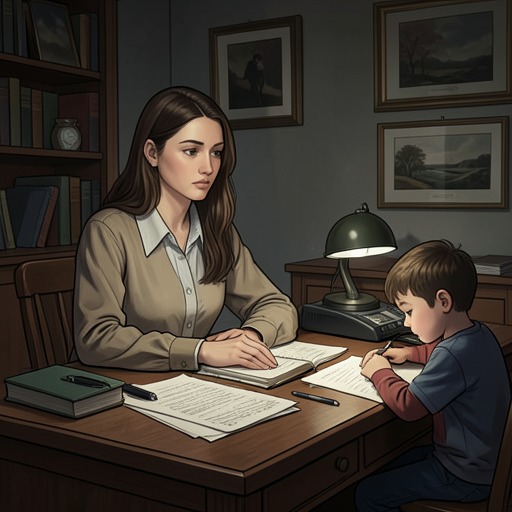
Koh Boonsoon lives with Kim Jiyoung’s family and is the grandmother of Kim Jiyoung and Kim Eunyoung. The children encounter her authority in an ordinary domestic detail: their baby brother’s formula. Koh Boonsoon objects to the girls taking any, and when she catches Kim Jiyoung doing so, she strikes her. After being admonished once, Kim Eunyoung stops eating the formula. The episode establishes that the food is treated not simply as a scarce household resource but as something reserved for the boy.
Kim Jiyoung cannot fully understand what her grandmother means, yet she recognizes the message conveyed by the woman’s manner. The grandson and his possessions are precious; the girls rank below those entitled to touch them. The scene gives the hierarchy a child’s concrete measure: a spoonful of formula becomes a test of who belongs at the center of the family’s care. Kim Eunyoung appears to share the same understanding, though the account does not give her a separate explanation of it.
A Life of Labor and Obligation
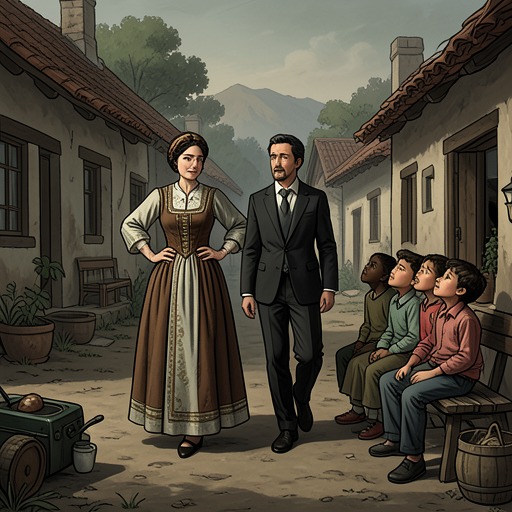
Koh Boonsoon raised four sons in a period when war, disease, and starvation threatened people of every age. She worked in other people’s fields, sold other people’s goods, and performed domestic labor in other households, while also maintaining her own home. Her husband, described as having a fair complexion and soft hands, never worked. Koh Boonsoon did not resent him for lacking either the ability or the will to provide; she considered him a decent husband because he did not have affairs or hit her. Her account of what counted as acceptable treatment reflects the narrow standards by which she judged marriage after a life of hardship.
Of the four sons she raised, only Kim Jiyoung’s father fulfilled his responsibilities toward her in old age. Her other children left her unwanted, a painful outcome she tried to rationalize. The family history therefore complicates any simple account of her as either only a victim of hardship or only an enforcer of unequal treatment: she has labored for others and been neglected by her children, yet she directs the household’s favoritism toward the grandson.
Her Daughter-in-Law and the Son Preference
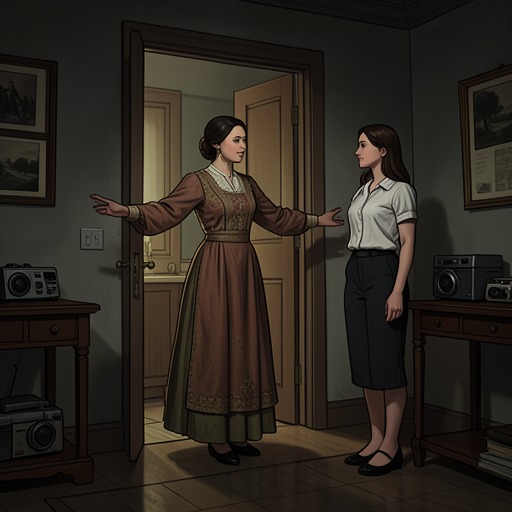
Oh Misook, rather than Koh Boonsoon’s son, prepares warm meals and bedding for her. Koh Boonsoon nevertheless has a habit of crediting her son with this care. At the same time, she is described as relatively easygoing and more caring toward her daughter-in-law than many mothers-in-law of her generation. That comparative kindness does not prevent her from urging Oh Misook to have a son, and at least two sons. The expectation is presented as heartfelt advice offered for the daughter-in-law’s sake, not as an isolated demand from a hostile relationship.
This combination of care and pressure links the family’s generations. Koh Boonsoon knows the work of keeping a household alive, and she depends on Oh Misook for practical care in old age; still, she repeats the belief that a daughter-in-law should produce sons. Her preference for her grandson in the formula episode gives that belief a daily expression, while her counsel to Oh Misook shows it continuing into the next generation. The novel thus places female labor and affection inside a family order that assigns greater value to male children.
Death and the Empty Room
A year after the events surrounding the grandmother’s household, Koh Boonsoon dies, and a boy inherits her room. In the years that follow, he still takes his pillow to sleep in his mother’s arms. The room changes hands, but the account’s final detail returns attention to the child’s need for maternal closeness. Set beside Koh Boonsoon’s earlier insistence on her grandson’s special value, this ending leaves the household’s patterns visible without suggesting that inheritance alone determines where a child seeks comfort.